
The ₱10.8 Trillion Question: Why Philippine Infrastructure Is a Governance Challenge
The Philippines is not short of infrastructure ambition. Last month, the Economy and Development Council, chaired by the President and the highest economic policymaking body in the country, approved the 2026 list of Infrastructure Flagship Projects. 201 projects. ₱10.8 trillion. Roads, bridges, airports, water systems, energy infrastructure. With 40 to 50 of those projects targeted for PPP financing, private capital is being called on to play a defining role.
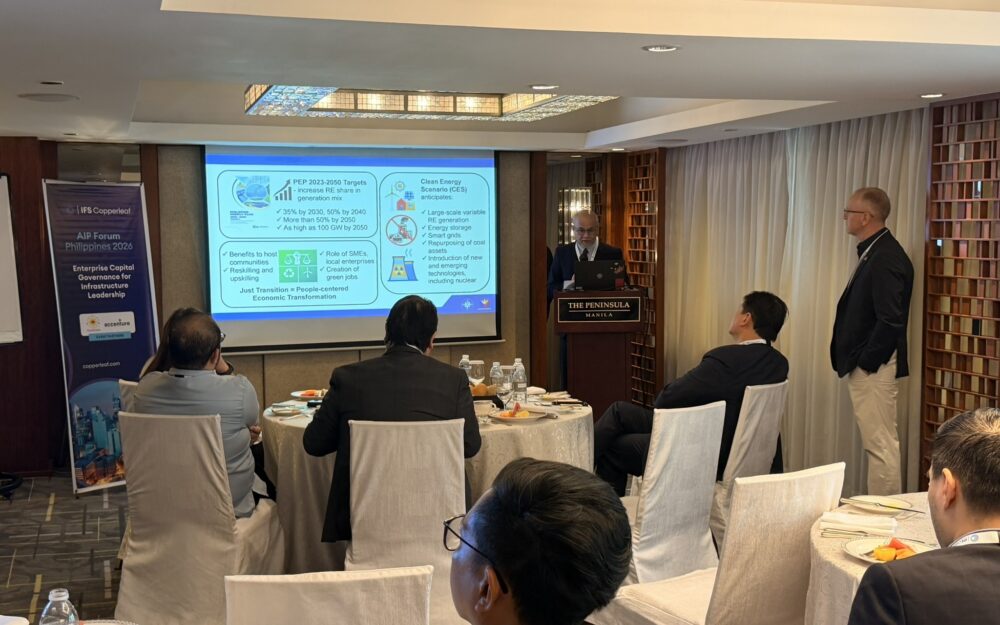
The scale is genuine. The commitment is real. And yet, as Undersecretary Joseph Capuno of the Department of Economy, Planning and Development said at the AIP Forum Philippines in Manila last month: the challenge is not only to deliver projects, but to ensure they deliver the expected value.
That distinction matters more than it might seem.
Building more is not the same as building better
The Philippine Development Plan 2023–2028 sustains public infrastructure spending at 5 to 6% of GDP even amid fiscal consolidation. That is a significant commitment at a time when global capital costs are rising, regulatory expectations are tightening, and the pressure of energy transition is accelerating. The government is not stepping back. It is stepping forward under real constraints.
Which means that every peso in that ₱10.8 trillion pipeline has to work harder than ever before. The question is no longer whether to invest. It is how to decide where to invest, when to invest, and how to compare investments that are genuinely difficult to compare.
A road and a water treatment facility and a grid upgrade do not sit naturally on the same scale. Neither do a reliability improvement and an ESG commitment and a regulatory mandate. When organisations try to weigh these against each other using spreadsheets and siloed processes, decisions become subjective. They become harder to defend internally. And they become harder to justify to the regulators, investors and communities who increasingly expect transparency and accountability.
This is what Usec Capuno called capital governance: not just the discipline to invest, but the discipline to govern investment well. Transparency, accountability, and strategic management across the full lifecycle of every asset.
The energy transition makes this harder, not easier
The government’s energy targets compound the challenge. Under the Philippine Energy Plan 2023–2050, the country has committed to 35% renewable energy in the power mix by 2030, rising to 50% by 2040, with total renewable capacity reaching up to 100GW by 2050. That is not just a policy ambition. It is a multi-decade infrastructure transformation spanning generation, transmission, storage and digital energy systems.
The decisions required to deliver that transformation cannot be made in isolation. Retiring coal assets, integrating variable renewables at scale, deploying storage and smart grids, each of these has implications for cost, risk, reliability, employment and communities. They have to be evaluated as a portfolio, with a clear view of how each investment interacts with every other one. That is where conventional planning approaches run out of road.
The gap between ambition and execution
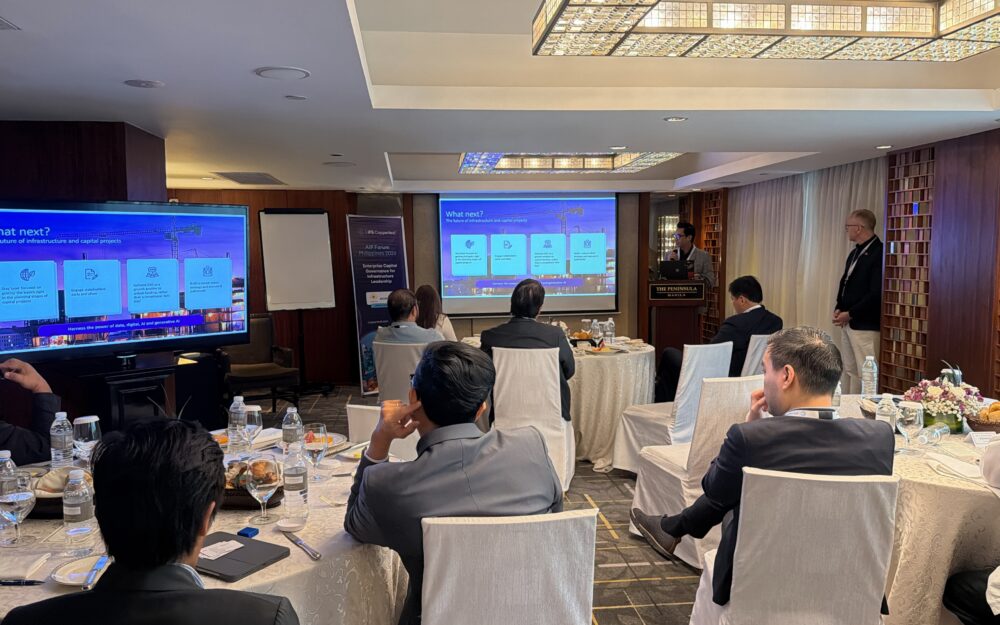
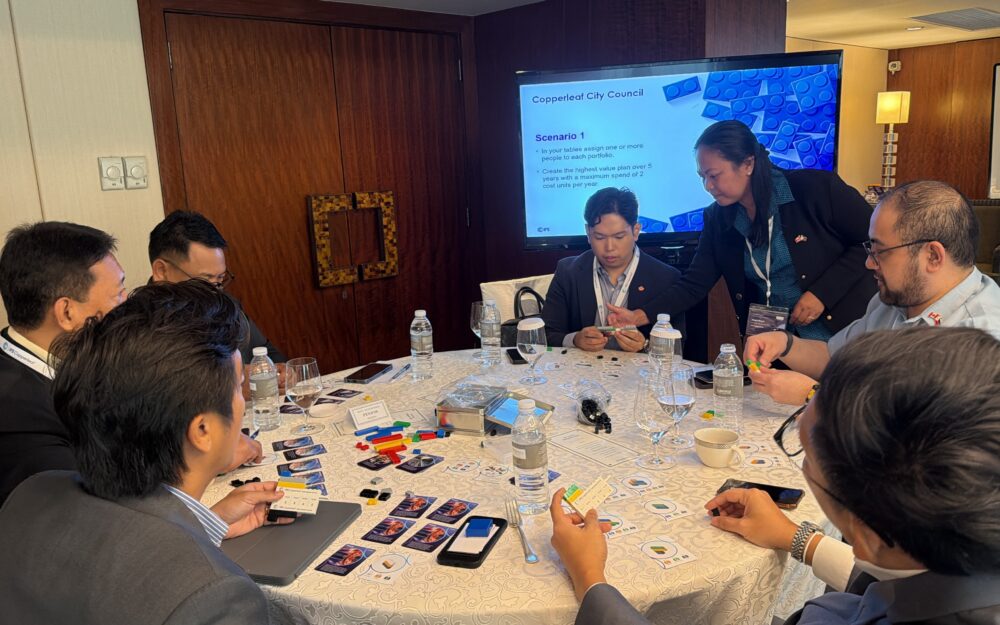
Global research makes the challenge concrete. Accenture surveyed more than 700 organisations across 23 countries and found that 58% of capital projects globally miss their schedule or stakeholder commitments. Only 5% of utility companies consistently deliver on time and on budget. These findings were shared at the AIP Forum Philippines, where infrastructure and energy leaders from across the country gathered to discuss exactly this challenge alongside representatives from the Embassy of Canada, the Canadian Chamber of Commerce of the Philippines, and DepDev.
The 5% who consistently succeed share a common approach. They use data and AI to anticipate risk rather than react to it. They evaluate investments as portfolios rather than as individual projects ranked on a list. And they move beyond prioritisation to optimisation, finding not the best individual project but the best combination of investments under real constraints: budget, resources, regulatory requirements and risk appetite.
That shift is where outcomes change. Research suggests organisations that move from prioritisation to optimisation gain between 7% and 20% in incremental portfolio value. At ₱10.8 trillion, that difference is not marginal.
How leading organisations are closing the gap
This is precisely where IFS Copperleaf helps infrastructure organisations make better capital decisions. Rather than relying on fragmented tools and subjective scoring, organisations use IFS Copperleaf to establish a common value framework, one where every investment, whether it reduces risk, improves reliability, supports ESG targets or meets a regulatory requirement, is evaluated on the same economic scale.
That common scale is what makes trade-offs explicit rather than political. It is what makes decisions defensible internally and with regulators. And it is what allows organisations to move from evaluating projects one by one to optimising an entire portfolio simultaneously, identifying the combination of investments that delivers the highest value within real-world constraints.
The results at organisations that have made this shift are measurable. National Grid Electricity Transmission in the UK reduced its planning cycle by 50% while managing more than 60,000 assets and 5,000 annual interventions, avoiding around 1,000 planned outages in the process. Anglian Water delivered £50 million in productivity benefits over five years, a 61% reduction in capital carbon and 42% cost savings, while meeting its 2030 net-zero targets ahead of schedule.
These are not niche outcomes from unusually large organisations. They are consistent results across utilities, water, energy and transportation sectors globally. The approach works because the underlying challenge, too many investments, too many competing objectives, too little time to decide well, is universal.
For Philippine infrastructure and energy leaders navigating a ₱10.8 trillion investment cycle under constrained fiscal conditions, that consistency matters. The investment cycle is real. The government commitment is sustained. What determines whether that investment delivers its intended value is not the quantity of capital deployed but the quality of the decisions made along the way.
What this means in practice
At the AIP Forum Philippines, the conversation kept returning to the same conclusion. The tools and approaches exist. The evidence is there. What is needed is the willingness to move from the familiar comfort of prioritisation to the discipline of optimisation.
IFS Copperleaf works with infrastructure organisations at exactly this intersection, helping them structure their capital decisions, evaluate trade-offs objectively, model scenarios rapidly, and build investment plans that are transparent and defensible to every stakeholder. From utilities and water companies to energy and transportation organisations, the platform is designed for the complexity that the Philippine infrastructure agenda demands.
The Philippines has set clear targets. It has defined a path. What remains is execution, and the governance discipline to ensure that every peso in that pipeline goes where it delivers the greatest value.
See how IFS Copperleaf helps infrastructure organisations move from prioritisation to optimisation.
Talk to an IFS Copperleaf expert
This article draws on insights shared at the AIP Forum Philippines, held in Manila on March 26, 2026. The full presentation from the session, including the Accenture research findings and IFS Copperleaf platform overview, is available on the event recap page: https://engage.copperleaf.com/aip-forum-ph-2026
You want to be invited to our next AIP Forum? Please let us know at: claire.mignot@ifs.com